A friendly reminder

Please don’t tell me you are “sorry”. When you find out someone’s child is disabled (i.e., has Autism, Rett syndrome, Down’s syndrome, etc.) do not say you are “sorry” – we understand you mean well, but it is incredibly upsetting to hear. Our child is still our child. She has not died and we are not at all sorry she exists. We are madly in love with her. As you are with your child. Every accomplishment, development, laugh, makes our hearts sing! Just as your child’s accomplishments, development, happiness, makes your heart sing. Every tear she sheds breaks our hearts. Just as your child’s tears breaks yours.

Granted, ours is not a life we likely would have chosen. And we have had to drastically shift our expectations (like continental – tectonic plate shifts). And we have had to come to terms with a life completely different than the one we had expected to lead. And it is a challenge. And it is not one we would ever expect you to understand. And it is not one we would ever want you to lead…it is hard. And we are NOT sorry. Our child gives us unspeakable joy and you saying you are sorry about her is heart breaking and painful to hear. We only wish you could see her as we see her and enjoy her as we enjoy her…So do not tell us you are sorry.

Just that.

Lifted, almost verbatim, from Jocelyn Gould Turken, super Mom and autism advocate. ❤️

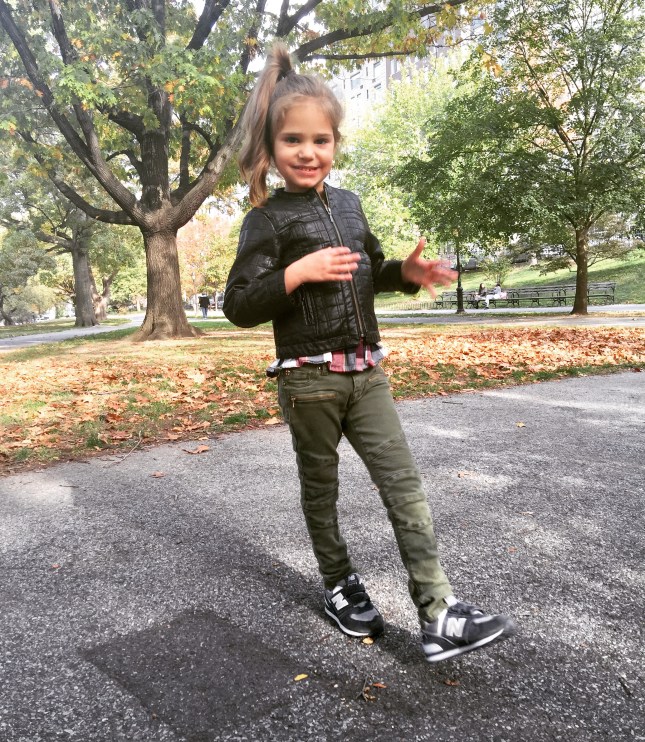
Lily was featured in this years NYC Disability Pride Parade. This kid is making headlines. And changing perceptions about what it is like to live with a disability. She is my hero.

To supplement or not to supplement

Recently on one of the parent groups, a question was asked about whether or not it’s worth buying expensive supplements for your kiddo. I thought my response could be helpful to other parents on a similar journey so I’m sharing here:

I’ve been using Agape on and off for years. When I can’t find it or afford it, I use the stuff you get at wholefoods ‘child life’ I think is the brand. I also have used and am using a mix of other supplements for my kiddo on top of this. And have I seen results? How can you really know? And what results are you looking for?

My daughter isn’t ASD (autism spectrum disorder), she has a disorder that, among other things, can cause growth issues (i.e. head and feet and other body parts stop growing) and failure to thrive because of malabsorption in the gut. She also has sensory issues and struggles concentrating. She physically cannot sit still due her her disorder.

So what have I seen? Well one thing is that she is on the growth charts. And continues to grow (though her weight is very much on the low end of the charts, but so is mine). I also see that she is healthy. And is getting better at paying attention. But is it just because she’s maturing? Is it because she got lucky and doesn’t have the growth issues that the other girls with Rett Syndrome have?

I don’t know. But I’m going to keep supplementing her and ensuring she eats the cleanest and healthiest foods possible (she’s on modified GAPS) because it can’t do anything but help.

If you’re not comfortable paying for Agape, why don’t you try the child life supplement to see if it’s something your kid will even tolerate before investing in a big, expensive bottle.

This SN parenting journey is not an easy one. And I’ve realized that we can’t do everything all the time. So pick and choose the things you believe in and think can help your sweetie be the best kiddo s/he can be.

img_4453

Long and lean, happy and healthy!

The true star at the ballet


image

A few months back, Lily and I were invited by her dad’s family to see a special ballet performance geared towards children with disabilities up in Connecticut.  Lily had a ball.  And as you will see (and hear – yup, that’s her yelping THROUGHOUT the clip), this kid had a GREAT time.

(Hopefully you can view the video.  For some reason, some browsers only show a picture, and not a link to the video.  Ping me if you can’t access it.)


The importance of genetic testing and Rett Syndrome…

I’ve recently been approached by two families who have concerns about their daughter’s development.  And both have asked me to share our journey to an accurate diagnosis.  If you remember, Lily was given two mis-diagnoses along this journey.  So I’ve decided to dedicate a post for families who are on a similar journey.  if you’re new to this site (you found me through middle of the night googling), please feel free to leave a message below and I’ll get back to you if you have any follow up questions.

Q: I am wondering if you could share with me a little more about your journey to an accurate diagnosis, as well as any providers or evaluations that you felt were significantly helpful?

To me, what was the MOST definite and defining moment for Lily was getting the genetic test results with the Rett diagnosis.  Here are the ‘steps’ it took to get there:

Autism diagnosis August 2012

Lily was talking and social and hitting all her milestones and then BAM.  At around 15-16 months, there was a major regression. The language went away, she became super aloof and disinterested and physically started demonstrating some delays as well.  She was initially diagnosed with autism at 18 months (both through Early Intervention and a private developmental pediatrician).

ESES Diagnosis November 2013

Once we started EI services (she was getting 20 hours of ABA, plus Speech, OT and PT), it became apparent that the autism label didn’t fit.  The words started to come back (and then go away – which is still happening).   She came out of her shell and was social and interested in the world around her again.  We then had a bunch of EEG’s done to try and figure out the underlying cause of her regressions and found out she had a rare form of epilepsy called ESES.  And we thought ‘aha! this is what is causing her regressions’.

Rett Syndrome Diagnosis January 2014

But while she was being treated for the ESES (using high doses of steroids that I had to inject into her leg every day which totally sucked for us both), we got the genetic results back (which we did to see if there was an underlying reason for the ESES).  Rett Syndrome was confirmed.  All her doctors (and she has many) were surprised with the results as she didn’t fit the ‘Rett girl’ profile.  She walked, she had some hand function and she wasn’t having seizures (though she does technically have epilepsy and has epileptic episodes which I’ve been told are NOT seizures).

Q: Who did you work with to get the Rett diagnosis?

The geneticist we worked with was Dr. Marion at Montefiore in the Bronx.  And what was especially great about being at Montefiore was that there is a Rett Clinic there (the only one in the tri-state area, led by Dr. Sasha Djukic) so we were already in the Montefiore system.  It also helped in terms of scheduling doctors appointments as the Rett clinic is open on Fridays and we now just go there once a year and see anywhere from 2 to 5 specialists in a day instead of going back and forth to the hospital to see all the different doctors.
Q: Where are you today?
A Rett diagnosis sucks.  But you learn to live with it.  And knowledge is most definitely power.  I know what I’m dealing with and I can better prepare myself and my child for the road ahead.  And by the way, it’s mostly a happy road we walk.
Q: Is she on a special diet?
Lily has been following the GAPS diet for the past two+ years (though she has pizza on Fridays at school) and is on the growth charts which I believe is because of the healthy foods and supplements she takes (many girls with Rett start to fall off the growth charts by the age of two).  She sees a nutritionist regularly.
Q: What types of therapies does she receive?
She goes to a private special needs preschool where she receives numerous therapies, and has an augmentive communication/speech generating device that she navigates with her eyes (think Stephen Hawkins).  It is called a Tobii.  Actually she has two Tobii’s – one at home (which we own and were able to procure through the EI program) and one at school (which took a year of advocating through the DOE CPSE program).
Here are the services she receives through the DOE, on a weekly basis:
At school:
  • 1:1 para professional for health and safety reasons (this is imperative: our girls cannot self defend)
  • 5×30 Speech Therapy
  • 4×30 Occupational Therapy
  • 4×30 Physical Therapy
At home (she has a ‘dual recommendation’, sometimes called an RSA, and is supposedly impossible to get through the DOE):
  • 6×60 SEIT (Special Education Itinerant Teacher)
  • 3×45 Speech
  • 3×45 OT
  • 1×45 PT
  • 4×60 Assistive technology services (so that the home speech therapist can program both Tobii’s and upload course curriculum to them so Lily can follow along in class and participate).
On the weekends she goes horseback riding through the GallopNYC program and is loving it.
Yes.  It is a lot of therapies.  And yes.  It was not an easy decision to put her in to all of these therapies.  But the proof is in the pudding:  My kid is thriving.
We live a mostly happy, and always busy life.  Yes.  It is possible.

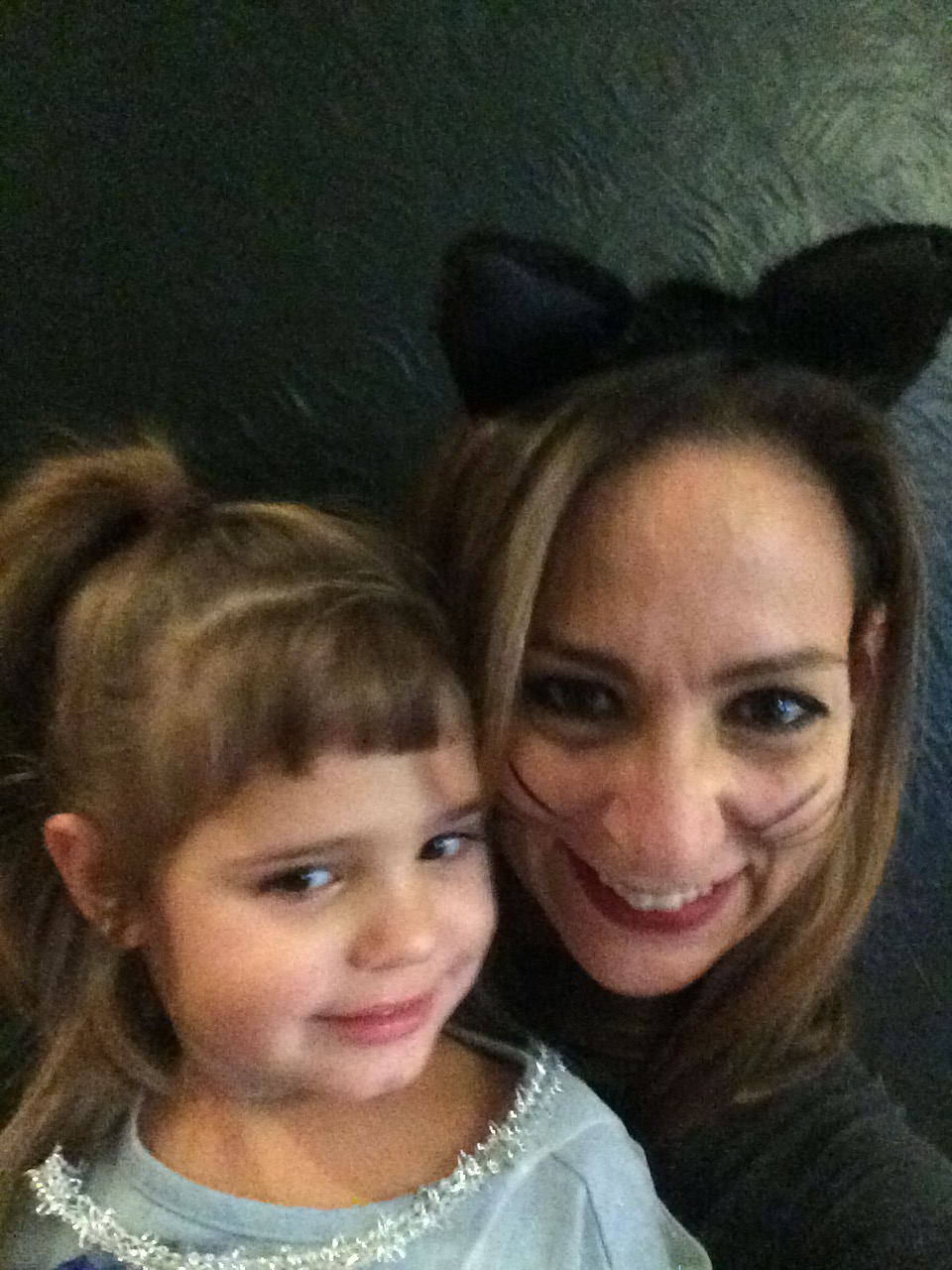
Happy Girls, Halloween 2015

Happy Girls, Halloween 2015

Lily’s a featured angel on the Int’l Rett Syndrome Foundation site

She’s going to be 3 years old and has had 3 different diagnoses.  The last one (Rett Syndrome) combines the first two (autism and ESES, pre-epileptic activity) and adds a few more.  But regardless…. she’s still the best.  Ever.

We are heading to the hospital tomorrow and will be there for her birthday, but will celebrate it in style.  As always.

Check out her profile here:
https://www.rettsyndrome.org/news-and-media/irsf-features/featured-angel

And there is NO need for gifts or anything of the sort for her birthday.  If you feel so moved to do something, you can always make a donation (large or small) to the IRSF.  They’re amazing and have been so helpful for us these past two weeks.

https://www.rettsyndrome.org/make-a-difference/donate-now/donate

Love,
C and L